

Modern indian societies lifestyle is driven by greed instead of need, thus to meet these daily demands, they are opting for debt. The increasing craze for credit cards and loans is a prime reason people fall into the trap of debt. These credit cards do come with a no-limit option, and for a personal loan, they provide a lot more lucrative options, thus tempting the public to opt for these methods.
But with rising interest rates and increasing inflations its hard to meet the demands, and the public often find themself trapped in this debt trap. Where it is hard to repay the principal amount, repaying interest becomes even harder.
The good news? With the right strategy, discipline, and planning, it is absolutely possible to pay off debt faster and regain financial freedom.
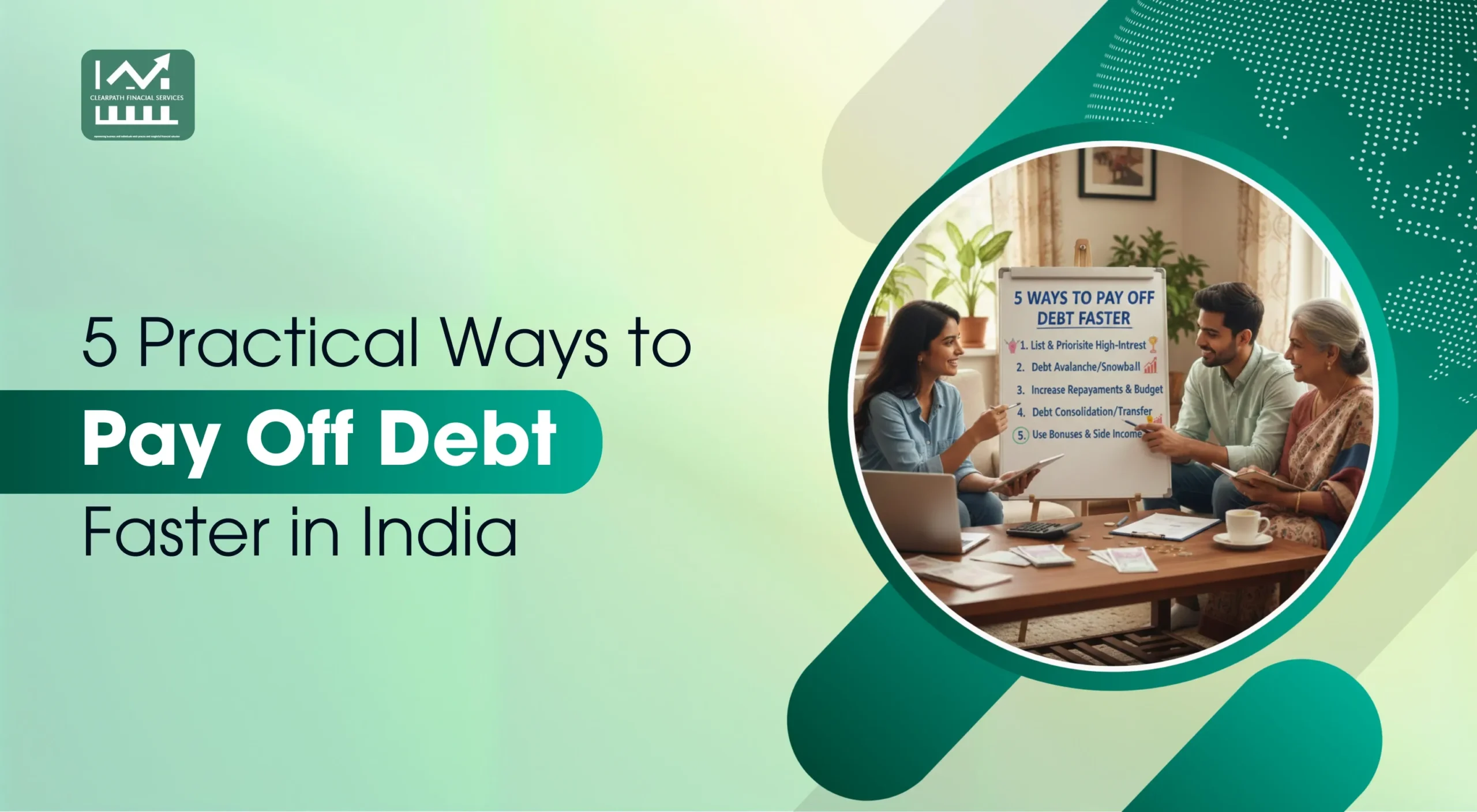
In this article, we’ll discuss in detail 5 practical an dproven ways to pay off debt faster in India. Also, to make it easier for you to prioritise high interest loan, we’ll provide you with debt management tips to stay debt-free once the debt is paid off.
Why Paying Off Debt Faster Matters
Before diving into strategies, it’s important to understand why fast debt repayment should be a priority:
- Saves thousands in interest payments
- Improves credit score (CIBIL)
- Reduces financial stress and anxiety
- Increases monthly disposable income
- Helps achieve long-term goals like buying a home or investing
Now, let’s look at the most effective ways to accelerate your debt-free journey.
1. List All Your Debts and Prioritise High-Interest Loans
The first step to paying off debt faster is complete clarity.
Create a Debt Inventory
Write down:
- Type of loan (credit card, personal loan, EMI, app loan, etc.)
- Outstanding amount
- Interest rate
- EMI or minimum payment
- Remaining tenure
Focus on High-Interest Debt First
In India, the most expensive debts usually include:
- Credit cards (30–45% interest)
- Personal loans (12–24%)
- Instant app loans (often with hidden charges)
Why This Works: Prioritising the payment of high-interest loans decreases the overall burden and helps in freeing money faster compared to prioritising the small loans. To repay these loans, one time extra payment can be an ideal option to save extra money in the long term.
Pro tip: Always pay more than the minimum due on credit cards whenever possible.
2. Use the Debt Avalanche or Debt Snowball Method
Once your debts are listed, choose a repayment strategy.
Debt Avalanche Method – Best for Saving Money
- Pay minimum EMIs on all loans
- Use extra money to aggressively repay the highest-interest loan
- After clearing it, move to the next highest interest
This method reduces total interest paid and is ideal for long-term savings.
Debt Snowball Method
- Pay minimum EMIs on all loans
- Focus extra payments on the smallest debt first
- Roll the freed EMI into the next loan
This method builds confidence by giving quick wins.
Which Is Better in India?
- Choose avalanche if interest rates are high
- Choose snowball if you need motivation to stay disciplined
Both methods work—consistency matters more than the method itself.
3. Increase Monthly Repayments Using Smart Budgeting
In india its a trend that the public generally repays a debt by taking another debt or by rearranging their expenses instead of increasing their income. This option provides them with short-term relief, but it cannot be a sustainable debt management option in the long run.
Create a Realistic Indian Budget by tracking home rents, EMIs, limited groceries, utilities, transport and fuel costs, social media subscriptions, dining out, unnecessary shopping, and loan EMIs.
Cut or Reduce Non-Essential Expenses
Examples:
- Reduce online food orders
- Cancel unused OTT subscriptions
- Limit impulsive shopping during sales
- Switch to prepaid mobile plans
Use the 50-30-20 Rule (Modified for Debt)
- 50% – essentials
- 30% – debt repayment
- 20% – savings (or more debt if needed)
Even an extra ₹3,000–₹5,000 per month can significantly reduce loan tenure.
4. Consider Debt Consolidation or Balance Transfer
If you’re juggling multiple EMIs, consolidation can simplify repayment.
What Is Debt Consolidation?
Debt consolidation is done by clubbing all the existing loans into one single loan with a lower interest rate. It is the most preferred method because it is easier to manage a single loan than juggling multiple debts.
Options Available in India
- Personal loan for consolidation
- Credit card balance transfer
- Top-up loan on home loan
- Gold loan (lower interest but risk involved)
When Consolidation Makes Sense
- You have multiple credit cards
- Interest rates are very high
- You struggle to track multiple EMIs
Things to Be Careful About
- Processing fees
- Hidden charges
- Longer tenure increases total interest
- Temptation to take on new debt
Used wisely, consolidation can reduce EMI pressure and speed up repayment.
Debt settlement and debt consolidation are two ways to manage heavy loans in India, but they work very differently. Debt settlement reduces the total payable amount but negatively affects your credit score, while debt consolidation combines multiple loans into one affordable EMI with a lower interest rate. When comparing Debt settlement vs Debt Consolidation in India: Which is best?, consolidation is generally the better option for long-term financial stability, whereas settlement should be used only as a last resort.
5. Use Bonuses, Side Income, and Windfalls Strategically
Extra money can become your biggest debt-killer—if used correctly.
Sources of Extra Income in India
- Annual bonus
- Freelancing or consulting
- Tuition or online teaching
- Selling unused items
- Tax refunds
- Festival incentives
Best Way to Use Windfalls: Instead of spending, use them to part-prepay high-interest loans, close credit card balances, and reduce loan tenure.
Why Part-Prepayment Works
Most Indian loans allow part-prepayment, which reduces principal, lowers total interest, and shortens loan duration. Always check prepayment charges before making large payments.
Bonus Tips to Stay Debt-Free Once You’re Clear
Paying off debt is only half the journey—staying debt-free matters just as much.
Build an Emergency Fund
Save at least 3–6 months of expenses to avoid future borrowing.
Use Credit Cards Wisely
- Pay the full balance every month
- Avoid EMI conversions for lifestyle purchases
- Keep credit utilisation below 30%
Avoid Instant Loan Apps
They often come with:
- Very high interest
- Hidden fees
- Aggressive recovery practices
Track Your CIBIL Score
A good score (750+) gives access to lower interest rates if you ever need a loan.
Common Mistakes Indians Make While Repaying Debt
- Paying only the minimum credit card dues
- Taking new loans to repay old ones
- Ignoring interest rates
- Not tracking expenses
- Using savings or PF without planning
Avoiding these mistakes can save years of repayment.
Conclusion
To conclude, it is safe to say that in India, repayment of debt doesn’t always involve some drastic changes in everyday life. It is more about how one strategically plan his/her finances along with proper budgeting and setting priorities accordingly.
As mentioned in the article above, one can easily pay off their debt by focusing on high-interest loans, picking the right method for repayments, and also by controlling un-necessary expensive expenses.
A trusted debt settlement company in India can help borrowers who are struggling with high-interest debt by negotiating affordable settlement options with lenders. This structured approach reduces financial stress and offers a clear, manageable path toward loan closure.